Trails
Coastal Path Walking: How to Tackle the South West Coast Path in Sections
Six hundred and thirty miles is an intimidating number. Break it down into day walks of eight to twelve miles and it becomes something you can chip away at for years, returning whenever the forecast looks kind. The South West Coast Path runs from Minehead in Somerset to Poole Harbour in Dorset, and as England's longest National Trail it is also one of the easiest to walk in sections. Towns, villages, buses, trains and ferries sit within a mile or two of the route almost everywhere, so you can walk a stretch and be back at the car or the station by teatime. The trick is to plan the transport first and the walking second.
This is not a soft option, mind. Cornwall's cliff steps are relentless, north Devon's combe descents will find muscles you had forgotten about, and a fifteen-mile day here can feel like twenty. Section walking simply means you get to choose which days those are.
Get to know the shape of the route
The path falls into recognisable chunks, and knowing them helps you pick a stretch that suits the time of year and the legs you have available. From Minehead you climb onto Exmoor's wooded cliffs, then drop through north Devon's surf towns — Ilfracombe, Woolacombe, Croyde — before the wild Hartland peninsula carries you into Cornwall.
Cornwall's north coast runs past Bude, Boscastle, Port Isaac and Padstow towards Newquay and St Ives, then the granite of Land's End. The south coast is gentler in places: the Lizard, Falmouth, Fowey, Looe, Plymouth. Beyond that come the South Hams, Torbay, the Exe estuary, and finally the red cliffs and shingle of east Devon and Dorset, ending in Purbeck. If you only have a long weekend, that geography matters more than any training plan.
Navigation is straightforward. Look for the acorn waymarkers on wooden posts and gates, and carry the relevant Ordnance Survey Explorer sheet rather than relying on a phone. The South West Coast Path Association publishes mileage charts and accommodation listings that make planning far quicker than guesswork.
Think in bases, not itineraries
The most common mistake is booking a different bed every night on a first attempt. It turns a holiday into a logistics exercise, and one late bus can unravel the whole week. Instead, choose one base for three or four nights and walk out from it, using a bus or taxi to reach a starting point in the morning.
Aim for eight to twelve miles a day, and treat climbing as the real currency rather than distance. A ten-mile stretch with three steep combes takes longer than a flat twelve. Ask yourself how you will get back before you set off, not at four in the afternoon when the last bus has gone.
Transport links that make section walking work
The south-west's public transport is patchy but genuinely useful if you use it sensibly. A few reliable options:
- Rail — main lines serve Exeter, Plymouth, Truro, Penzance and Weymouth, with branch lines such as St Erth to St Ives, Par to Newquay, Truro to Falmouth and Exeter to Exmouth all dropping you close to the path.
- Buses — coastal services connect most villages, but many are seasonal. Check the timetable the week before you travel, not the morning of.
- Ferries and crossings — Padstow to Rock, St Mawes from Falmouth, Dartmouth to Kingswear, Sandbanks to Studland. Short hops that save long road detours.
- Taxis — worth booking in advance around Hartland, the Lizard and west Cornwall, where buses are thin on the ground.
One tactic saves a lot of stress: park at the point where you intend to finish, then take the bus to your start. You walk towards the car all day and never have to chase the last service home.
Tides, ferries and steep ground
Tides
Some beaches and estuary crossings are only passable around low water. Carry a tide table, know the direction of the flood, and give yourself a healthy margin rather than aiming to cross at the turn. If in doubt, take the inland route — the path usually offers one, even if it adds a mile.
Ferries
Seasonal ferries are the weak link in any plan. Weather can stop them running, and a missed crossing can mean a ten-mile detour. Always have a plan B, and never build a day around a ferry so late that missing it leaves you stranded.
Ground underfoot
Cliff steps, muddy woodland and loose shingle all slow you down. Two miles an hour is a reasonable planning figure, and on the toughest stretches that is optimistic. Add time for photographs, swimming stops and the pub you will inevitably pass at an inconveniently perfect moment.
A worked example: four days in north Cornwall
- Boscastle to Tintagel — a shorter cliff-top opener with plenty of drama and a good bus back.
- Tintagel to Port Isaac — longer, with steep sections that reward an early start.
- Port Isaac to Polzeath — headland after headland; check the tide before the last few miles.
- Polzeath to Rock, then the ferry to Padstow — a gentler finish on the Camel estuary, with fish and chips as a reward.
Check distances against an official mileage chart before booking accommodation, and confirm that the buses and ferries you need are running in the month you are travelling.
Kit and safety
You do not need expedition kit for day sections, but you do need grip. Worn trainers on wet granite steps are an accident waiting to happen. Take a light waterproof, a warm layer, more water than feels necessary, sun cream, and a paper map you can use when the signal disappears — which it will.
Tell someone your route and expected finish time, carry a head torch in winter, and know that 999 or 112 reaches the coastguard along the coast. If you are new to long days on uneven ground, or you have a heart, lung or joint condition, speak to a GP before you start piling on the miles.
Before you book: a quick checklist
Pick a stretch of three to five days rather than a fortnight. Choose one base and one backup base. Confirm buses, ferries and tide times for your exact dates. Decide in advance how each day ends. Then book the accommodation, and leave the rest loose enough to allow for weather. The South West Coast Path rewards patience far more than ambition, and at eight miles a day you will still be walking it in a decade's time.
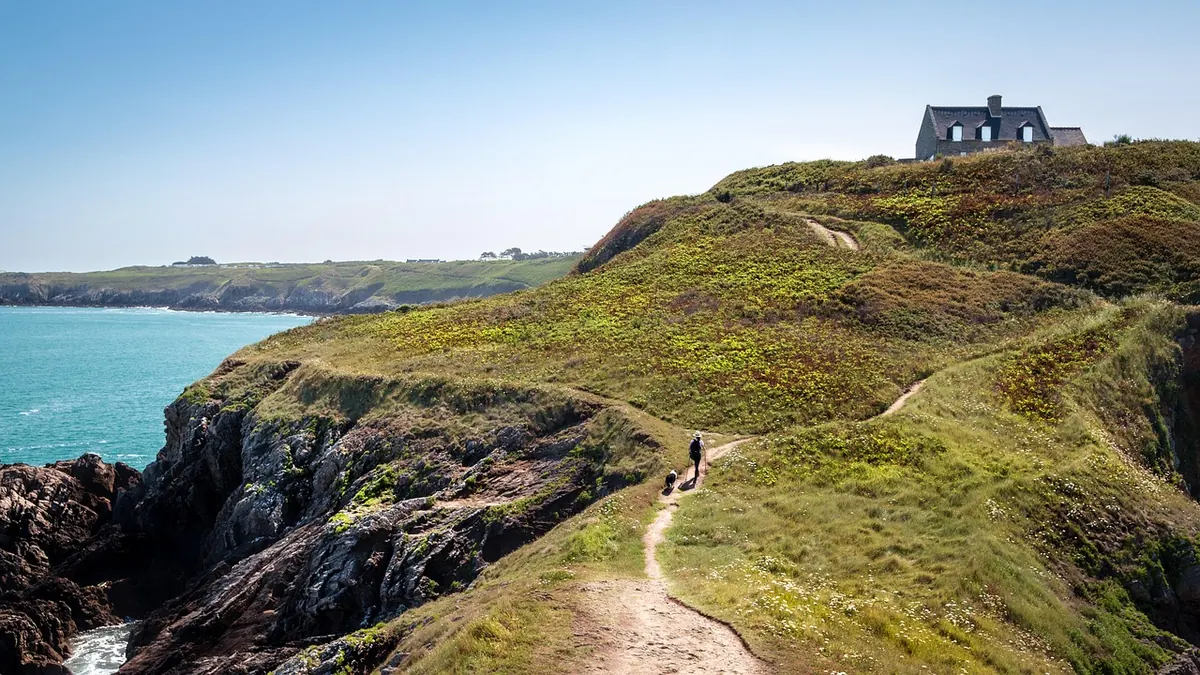
Photo: Jibs-breizh / Pixabay