Gear
Hiking Boots vs Trail Shoes: Which Should You Choose for UK Trails?
Halfway up a sodden path on Kinder Scout, the argument settles itself. One walker is picking a careful line around the bog in stiff leather boots; the other has already hopped across in light trail shoes and is waiting at the gate. Neither of them is wrong. But the choice they made in the shop mattered far more than either of them probably realised at the time.
Start With the Ground Under Your Feet
British trails are rarely one thing. A single day on the Pennine Way can serve up stone flagstones, deep peat, gravel forestry track, a boggy crossing and a mile of tarmac to finish. Ask yourself what most of your walking actually looks like, not what you'd like it to look like on a brochure day.
If eight out of ten of your days are lowland paths, woodland trails and canal towpaths, you are carrying boot weight for no reason. If you spend your weekends on fell tops, scree and wet rock, you will feel the difference the moment the ground turns nasty.
What Hiking Boots Give You
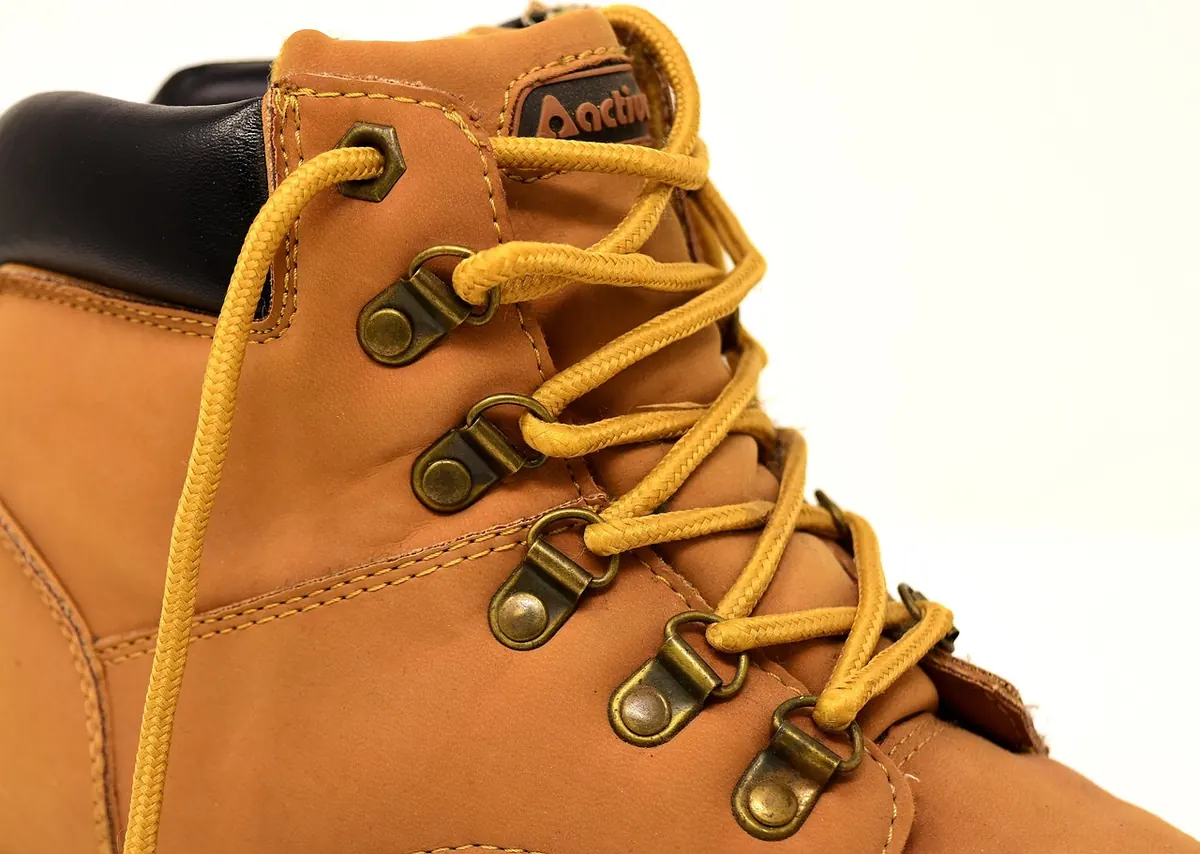
A proper boot earns its place in three ways: ankle support, underfoot stiffness and protection. A mid or high cuff holds your ankle when you're carrying a loaded rucksack or crossing a slope of loose stone. A stiffer sole spreads the pressure of sharp rock and stops small stones bruising the arch of your foot over a long day. A full leather upper shrugs off heather, gorse and the kind of squelch that soaks straight through mesh.
The cost is weight and feel. A pair of leather boots can weigh 700g to over a kilo each, and that weight sits at the end of a long lever, so every step costs you. Stiff soles also give less feedback on rock, which matters when you're picking holds on a scramble. New full-leather boots generally need a few shorter walks to soften at the flex point before a big day out.
Where Trail Shoes Win
Trail shoes and trail-running shoes have quietly become the default for a lot of UK hillwalkers, and the reasons are simple. They are light, they drain and dry quickly, and their flexible soles let your foot move the way it wants to. On long, gentle days, that lightness adds up to noticeably less fatigue by mid-afternoon.
They also grip well on rock. A softer rubber compound and a shallower, more closely spaced lug pattern often stick better to dry gritstone and limestone than a chunky boot sole does. The trade-offs are real, though: less ankle protection with a heavy pack, less underfoot shielding on stony ground, faster wear if you walk a lot of tarmac, and a cold, wet foot the moment bog water comes over the collar.
Grip: Mud, Rock and Wet Grass
Outsole design matters more than the boot-or-shoe question, and it is where most people buy badly.
- Deep, widely spaced lugs (5mm and up) clear mud and grip peat and loose dirt. Excellent on a wet bridleway, noisy and skittery on rock slabs.
- Shallow, closely spaced lugs are the all-rounder. Fine on gravel, forest track and dry rock, but they fill up fast in a British bog.
- Soft rubber sticks to wet rock and is a joy on scrambles, but wears down quickly on gritstone and tarmac.
- Hard rubber lasts for years on rocky trails but can feel skittish on wet, polished stone.
Wet grass and greasy limestone will humble any sole ever made. Slow down, use your poles and accept that no tread pattern makes a wet descent safe to rush.
Waterproofing and the British Weather
This is the choice that divides walkers more than anything else. A waterproof membrane keeps shallow puddles and short grass out, and it keeps wind off your feet in winter. But once water comes over the collar of a low shoe, that membrane holds it in. A boot with a high cuff and a waterproof lining can stay dry through a genuinely wet day; a low, lined shoe can end up holding a small pond.
Unlined, fast-draining shoes are the opposite: you get wet, then you dry out within half an hour of walking. For summer hill days, stream crossings and multi-day routes where your feet will get soaked anyway, that is often the better deal. Whichever you pick, rinse mud off the outsoles and uppers, air-dry them away from radiators and direct sun, and reproof leather boots occasionally so they stay supple.
Matching Footwear to the Walk
- Long-distance waymarked trails (South Downs Way, Hadrian's Wall Path, Ridgeway): trail shoes or light mid boots. Firm, groomed surfaces reward low weight.
- Rocky mountain days (Snowdonia's Yr Wyddfa paths, Lake District scree): mid boots if you carry weight, aggressive trail shoes if your pack is light.
- Peat bogs and fell tops (Kinder, the Cheviots, the Scottish hills): boots, or shoes with deep lugs and quick-drying uppers and a willingness to get wet.
- Woodland, lowland and towpath walks: trail shoes, every time.
- Winter conditions, snow and crampons: a stiff, waterproof boot with a defined heel and toe welt. Crampon-compatible footwear needs a sole rigid enough to hold the binding, so check compatibility before you buy.
A Practical Way to Decide
Rather than agonising over categories, work backwards from your own walking.
- Write down your last five or six walks and what the ground was underfoot for most of each one.
- Weigh your rucksack for a typical day. Under about 10kg, trail shoes are comfortable for most people on most terrain.
- Try both options on late in the afternoon, wearing the socks you actually walk in. Feet swell during the day, and a shoe that fits at 10am can pinch at 4pm.
- Check the heel lock first. If your heel lifts when you push off, or your toes jam the front on a descent, no amount of grip or waterproofing will save the day.
- Buy for the terrain you walk most, not the one walk a year that makes you feel adventurous.
Plenty of people end up with both, and that is not indecision. A light pair of trail shoes for summer paths and a supportive boot for winter fells is a genuinely sensible two-shoe wardrobe, and each will last longer because of it.
If you have ongoing ankle trouble, plantar pain or a history of foot injuries, get advice from a physiotherapist or podiatrist before deciding how much support you need. The right answer for your feet is worth more than any general rule.
Photo: Alexas_Fotos / Pixabay